
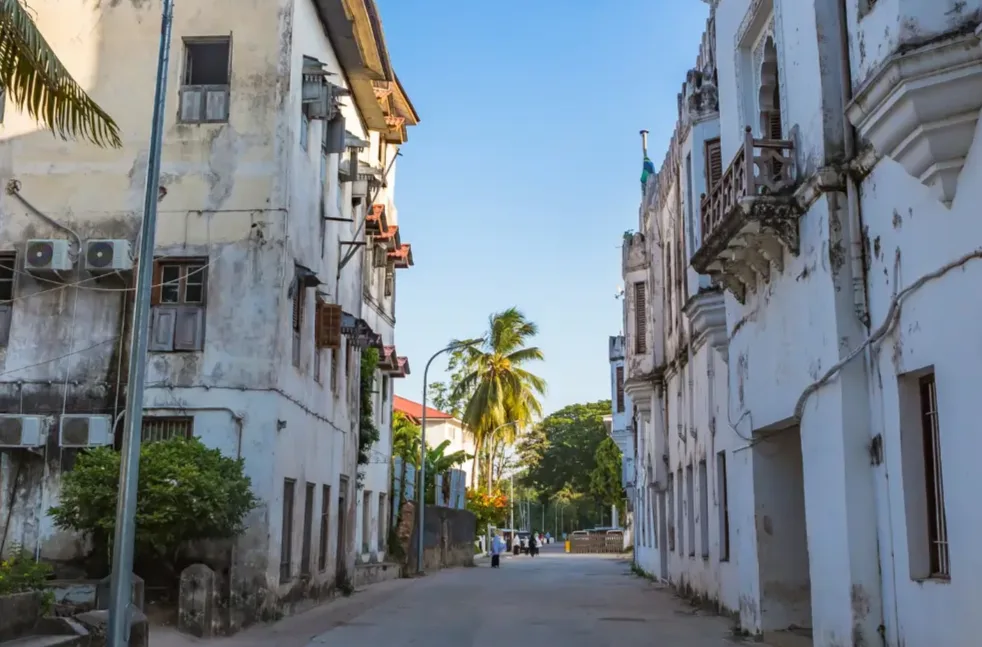
You do not need to be fluent to connect with people in Tanzania. A warm Habari! at the hotel desk, an Asante sana to your safari guide or a smiling Shikamoo to an elder can change the tone of an entire conversation.
This guide from African Visuals & Safaris collects the Swahili words our guests actually use: greetings and the replies people expect, polite phrases, shopping and bargaining, numbers, the famous “Swahili time” and a few friendly slang words. Every phrase includes a simple pronunciation guide.
The five Swahili words every visitor should learn first
Habari? (How are you?), Asante (Thank you), Tafadhali (Please), Karibu (Welcome) and Pole pole (Slowly, take it easy). With these five words you can greet people, say thank you, ask politely and understand two phrases you will hear many times a day in Tanzania and Zanzibar.
How to pronounce Swahili: easier than you think
Swahili (Kiswahili) is written in the Latin alphabet and is largely phonetic: words are pronounced the way they are spelled. Three rules will take you a long way.
- Five pure vowels: a as in “father”, e as in “bed”, i as in “machine”, o as in “more” and u as in “food”. They never change.
- Pronounce every letter: Kiboko is kee-BOH-koh and Shikamoo has two separate o sounds.
- Stress the second-to-last syllable: ha-BAH-ree, a-SAHN-teh, ka-REE-boo.
In the tables below, the syllable in capitals is the one to stress. Swahili is the national language of Tanzania and is spoken by millions of people across East and Central Africa, so the phrases you learn here also work in Kenya, Uganda and beyond.
Swahili greetings and the replies people expect
Greetings are important in Tanzania. It is polite to greet someone before asking a question, even a shopkeeper or a taxi driver. Most greetings have a standard reply, and the reply to almost every “Habari” question is positive, even on a difficult day.
| English | Swahili | Say it | Typical reply |
|---|---|---|---|
| How are you? | Habari yako? | ha-BAH-ree YAH-koh | Nzuri sana, na wewe? – Very good, and you? |
| How is it going? / What is the news? | Habari gani? | ha-BAH-ree GAH-nee | Salama, na wewe? – Peaceful, and you? |
| What’s up? (informal) | Mambo? / Mambo vipi? | MAHM-boh VEE-pee | Poa! or Poa kabisa – Cool! / Totally cool |
| Are you well? | Mzima? | m-ZEE-mah | Mzima kabisa – Completely well |
| Hello (classic) | Hujambo? | hoo-JAHM-boh | Sijambo – I am fine |
| Hello (tourist-friendly) | Jambo! | JAHM-boh | Jambo! – Hello! |
| Good morning | Habari za asubuhi? | ha-BAH-ree zah ah-soo-BOO-hee | Nzuri – Good |
| How did you wake up? | Umeamkaje? | oo-meh-ahm-KAH-jeh | Salama – Peacefully |
| Good afternoon | Habari za mchana? | ha-BAH-ree zah m-CHAH-nah | Nzuri, na wewe? – Good, and you? |
| Good evening | Habari za jioni? | ha-BAH-ree zah jee-OH-nee | Nzuri – Good |
| Good night | Usiku mwema | oo-SEE-koo MWEH-mah | Na wewe pia – You too |
| Sleep well | Lala salama | LAH-lah sah-LAH-mah | Asante, na wewe pia – Thank you, you too |
| Respectful greeting to an elder | Shikamoo | shee-kah-MOH-oh | Marahaba – I accept your respect |
| Welcome | Karibu | kah-REE-boo | Asante – Thank you |
| Goodbye | Kwaheri | kwah-HEH-ree | Kwaheri – Goodbye |
| See you later | Tutaonana | too-tah-oh-NAH-nah | Haya, tutaonana – Okay, see you |
Local tip: “Jambo” is widely used with visitors, but Tanzanians usually greet each other with Habari, Mambo or Shikamoo. Use Mambo with people your age and Shikamoo with anyone clearly older than you; it is one of the most appreciated words a visitor can learn.
Introducing yourself in Swahili
| English | Swahili | Say it |
|---|---|---|
| What is your name? | Unaitwa nani? | oo-nah-EET-wah NAH-nee |
| My name is … | Naitwa … | nah-EET-wah |
| Where are you from? | Unatoka wapi? | oo-nah-TOH-kah WAH-pee |
| I am from … | Natoka … (e.g. Natoka Uingereza – from the UK) | nah-TOH-kah |
| Nice to meet you | Nafurahi kukujua | nah-foo-RAH-hee koo-koo-JOO-ah |
| I speak a little Swahili | Ninaongea Kiswahili kidogo | nee-nah-ohn-GEH-ah kee-swah-HEE-lee kee-DOH-goh |
You may also hear Unatokea wapi? in everyday speech; it means the same thing. A few country names: Marekani (USA), Ujerumani (Germany), Ufaransa (France), Uholanzi (Netherlands), Uhispania (Spain), Italia (Italy) and Kanada (Canada).
Essential everyday Swahili phrases
| English | Swahili | Say it |
|---|---|---|
| Thank you / Thank you very much | Asante / Asante sana | ah-SAHN-teh SAH-nah |
| Please | Tafadhali | tah-fah-DHAH-lee (dh as in “this”) |
| Yes | Ndiyo (often written Ndio) | n-DEE-yoh |
| No | Hapana | hah-PAH-nah |
| Excuse me / Sorry | Samahani | sah-mah-HAH-nee |
| Sorry (sympathy, e.g. after a fall) | Pole | POH-leh |
| Slowly / Take it easy | Pole pole | POH-leh POH-leh |
| Help me, please | Nisaidie, tafadhali | nee-sah-ee-DEE-eh |
| I don’t understand | Sielewi | see-eh-LEH-wee |
| I don’t know | Sijui | see-JOO-ee |
| How do you say … in Swahili? | Unasemaje … kwa Kiswahili? | oo-nah-seh-MAH-jeh … kwah kee-swah-HEE-lee |
| I want … | Nataka … | nah-TAH-kah |
| I need … | Nahitaji … | nah-hee-TAH-jee |
| This is mine / This is yours | Hii ni yangu / Hii ni yako | HEE-ee nee YAHN-goo / YAH-koh |
| No problem / No worries | Hakuna matata / Hakuna shida | hah-KOO-nah mah-TAH-tah / SHEE-dah |
| Have a nice day | Siku njema | SEE-koo n-JEH-mah |
| Have a safe trip | Safari njema | sah-FAH-ree n-JEH-mah |
Did you know? “Hakuna matata” really is Swahili, but in daily conversation Tanzanians more often say hakuna shida or the casual hamna shida. And the word safari simply means “journey” – a bus ride to work is also a safari.
Shopping, prices and polite bargaining in Swahili
In markets such as Stone Town’s Darajani or the Maasai craft stalls, a few Swahili words show respect and often lead to a friendlier price. Bargaining should always stay good-humoured; if you agree on a price, it is polite to buy.
| English | Swahili | Say it |
|---|---|---|
| How much is it? | Shilingi ngapi? / Bei gani? | shee-LEEN-gee NGAH-pee / BEH-ee GAH-nee |
| How much is this? | Hii ni shilingi ngapi? | HEE-ee nee shee-LEEN-gee NGAH-pee |
| It is too expensive | Ni ghali sana | nee GHAH-lee SAH-nah |
| Can you reduce the price? | Unaweza kupunguza bei? | oo-nah-WEH-zah koo-poon-GOO-zah BEH-ee |
| Reduce it a little | Punguza kidogo | poon-GOO-zah kee-DOH-goh |
| Okay / Agreed | Sawa | SAH-wah |
| I will buy it | Nitanunua | nee-tah-noo-NOO-ah |
| Just looking, thank you | Naangalia tu, asante | nah-ahn-gah-LEE-ah too |
A friendly market exchange in Swahili
You: Habari, mama! – Hello, madam!
Seller: Nzuri, karibu! – Good, welcome!
You: Asante. Hii ni shilingi ngapi? – Thank you. How much is this?
Seller: Elfu thelathini. – Thirty thousand (TZS 30,000).
You: Ni ghali sana! Unaweza kupunguza bei? – That is very expensive! Can you lower the price?
Seller: Sawa, elfu ishirini na tano. – Okay, twenty-five thousand.
You: Sawa, nitanunua. Asante sana! – Okay, I will buy it. Thank you very much!
Seller: Karibu tena! – Welcome back any time!
Swahili numbers for prices and taxis
Tanzanian shilling prices quickly reach thousands, so the words for 100 (mia) and 1,000 (elfu) are especially useful. Larger numbers are built logically: elfu kumi is 10,000 and ishirini na tano is 25.
| Number | Swahili | Number | Swahili |
|---|---|---|---|
| 1 | moja | 9 | tisa |
| 2 | mbili | 10 | kumi |
| 3 | tatu | 20 | ishirini |
| 4 | nne | 30 | thelathini |
| 5 | tano | 50 | hamsini |
| 6 | sita | 100 | mia moja |
| 7 | saba | 1,000 | elfu moja |
| 8 | nane | 10,000 | elfu kumi |
Time words and the secret of “Swahili time”
| English | Swahili | English | Swahili |
|---|---|---|---|
| Today | Leo | Now / right now | Sasa / Sasa hivi |
| Tomorrow | Kesho | Later | Baadaye (often said baadae) |
| Yesterday | Jana | Time / hour / clock | Saa |
| Morning | Asubuhi | What time is it? | Saa ngapi? |
| Afternoon | Mchana | Evening | Jioni |
| Night | Usiku | Week / Day | Wiki / Siku |
Here is something that surprises many visitors: Swahili time starts counting at sunrise, not midnight. Because Tanzania is close to the equator, the sun rises around 7:00 AM all year, so that hour is saa moja asubuhi – “the first hour of the morning”. In practice, Swahili time is six hours different from the clock on your phone.
| Your watch | Swahili time | Literal meaning |
|---|---|---|
| 7:00 AM | Saa moja asubuhi | First hour of the morning |
| 8:00 AM | Saa mbili asubuhi | Second hour of the morning |
| 12:00 noon | Saa sita mchana | Sixth hour of the day |
| 1:00 PM | Saa saba mchana | Seventh hour of the day |
| 4:00 PM | Saa kumi jioni | Tenth hour, evening |
| 7:00 PM | Saa moja usiku | First hour of the night |
Tip: when you agree a pickup time with a driver or market guide, confirm it with a number on your phone screen, or ask “saa za kizungu?” (“in European time?”). All African Visuals booking documents use standard clock time.
Useful words for food, water and getting around
| English | Swahili | English | Swahili |
|---|---|---|---|
| Toilet / bathroom | Choo | Where is the toilet? | Choo kiko wapi? |
| Food | Chakula | Water | Maji |
| Drinking water | Maji ya kunywa | Cold water | Maji baridi |
| Tea / Coffee | Chai / Kahawa | Delicious | Tamu |
| Okay | Sawa | Clean / great | Safi |
| Cool (slang) | Poa | Good / beautiful | Nzuri |
| Left / Right | Kushoto / Kulia | Straight ahead | Moja kwa moja |
| Stop here, please | Simama hapa, tafadhali | Where is …? | … iko wapi? |
| Hospital | Hospitali | Shop | Duka |
Hungry? Our guide to Swahili food names explains pilau, ugali, mishkaki, chipsi mayai and Zanzibar pizza, plus the phrases you need to order.
Swahili words for people, family and friends
| English | Swahili | When to use it |
|---|---|---|
| Brother | Kaka | A friendly way to address a young man |
| Sister | Dada | A friendly way to address a young woman |
| Madam / Mother | Mama | Polite for an adult woman, for example a seller |
| Elder / Sir | Mzee | Respectful for an older man |
| Friend | Rafiki | Yes, like the wise baboon in The Lion King |
| Friend, buddy (slang) | Mshikaji / Swahiba | Casual, between friends |
| Boss, chief | Mkuu | Friendly and respectful, often to drivers or waiters |
| Man / Woman | Mwanaume / Mwanamke | General words |
| Child / Children | Mtoto / Watoto | General words |
| People | Watu | General word |
Heading on safari? Our companion guide to Swahili animal names and safari words covers simba, tembo, twiga and the phrases your guide will use on a game drive.
Cultural tips that matter more than perfect grammar
- Greet first, ask second. Start with Habari or Shikamoo before asking for directions or a price.
- Use your right hand to give, receive and eat; offering both hands shows extra respect.
- Ask before taking photos of people: Naweza kupiga picha? (May I take a photo?) and accept a polite no.
- Embrace pole pole. Life, service and conversations can move at a relaxed pace, especially in Zanzibar.
- Dress modestly in towns and villages, particularly in Stone Town and during Ramadan. Our Tanzania visa and travel safety guide includes more etiquette advice.
Practise your Swahili with African Visuals & Safaris
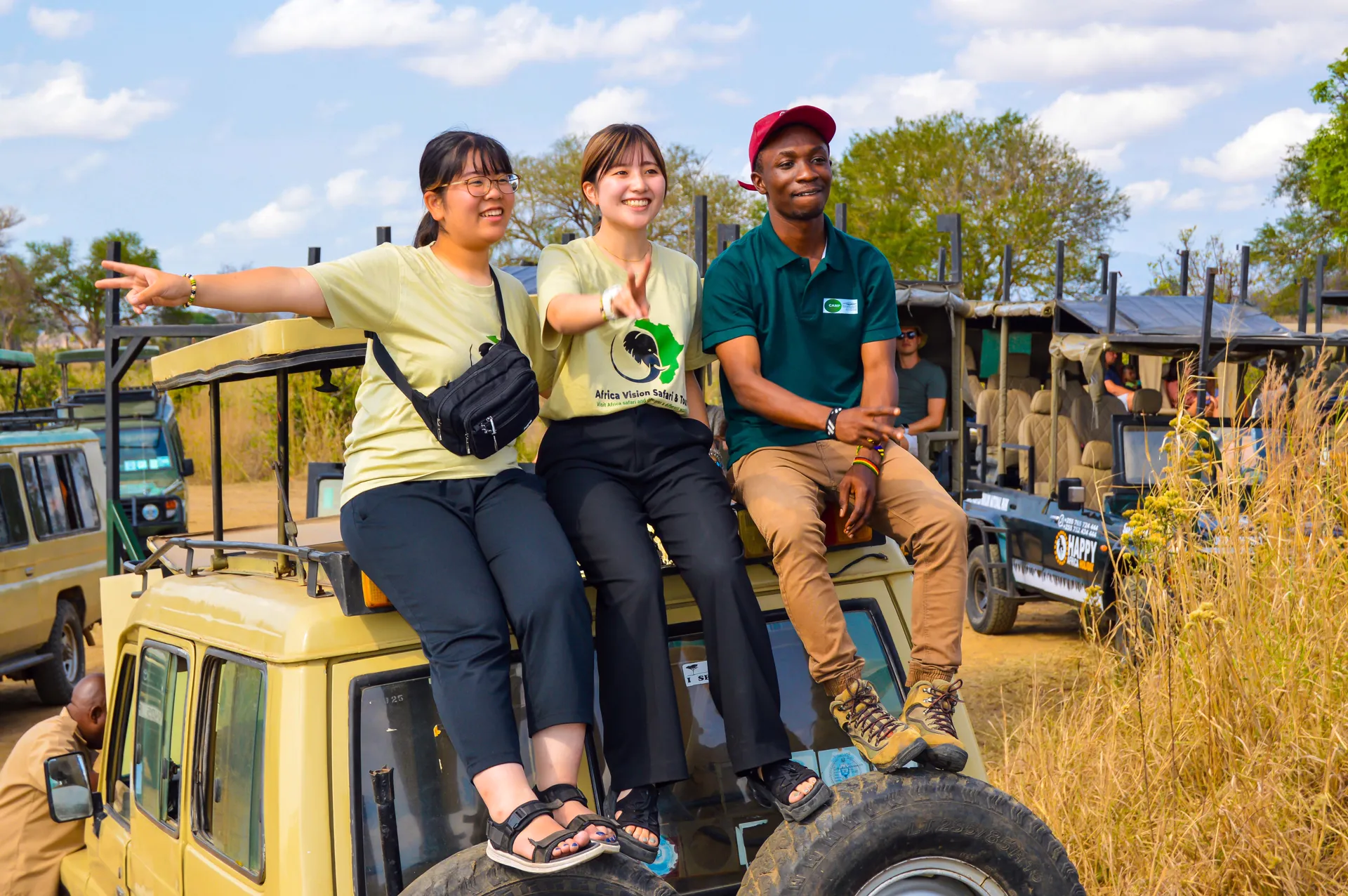
African Visuals & Safaris is a Tanzanian company. Our guides grew up speaking Swahili and enjoy sharing the language, stories and humour behind it, whether you are on a game drive in Mikumi or walking the lanes of Stone Town.
Local guides
Learn real, everyday Swahili from the people you travel with, not just from a phrasebook.
Culture built in
Our Zanzibar Cultural Deep Dive brings you into markets, kitchens and conversations.
Safari and coast
Use your new words on a Mikumi day safari or a Zanzibar island journey.
Swahili for travellers: FAQs
How do you say hello in Swahili?
The most common greeting is Habari? (How are you?), answered with Nzuri (Good). Friends often say Mambo? and reply Poa. Visitors often hear Jambo, and you should greet elders with Shikamoo, to which they reply Marahaba.
How do you say thank you in Swahili?
Say Asante for thank you and Asante sana for thank you very much. The usual reply is Karibu, which means you are welcome.
Is Swahili hard to learn for travellers?
Swahili is one of the friendliest African languages for beginners. It uses the Latin alphabet, words are pronounced as they are written and stress almost always falls on the second-to-last syllable, so basic phrases can be learned in a few days.
Do people in Tanzania speak English?
English is widely used in tourism, hotels, safari companies and business, so you can travel comfortably without Swahili. Swahili is the language of daily life, though, and even a few words make interactions warmer.
What does pole pole mean?
Pole pole means slowly or take it easy. You will hear it from Kilimanjaro guides, drivers and hotel staff. On its own, pole is a word of sympathy, similar to saying sorry when someone is hurt or tired.
What is Swahili time?
Swahili time counts the hours from sunrise at about 7:00 AM instead of from midnight, so 7:00 AM is saa moja (the first hour) and 1:00 PM is saa saba. Always confirm important times in standard clock time.
Keep learning: 7 July is World Kiswahili Language Day, recognised by UNESCO. Read more travel planning advice on our Tanzania travel blog or browse Tanzania safaris and Zanzibar tours.
Ready to say “Habari” in person?
Tell us your travel dates, group size and the places you dream of visiting. We will build a safari or Zanzibar journey with local guides who will happily help you practise your Swahili.
