
Food is one of the best ways to understand Tanzania. In a single day you can eat maandazi with spiced tea for breakfast, a plate of pilau fragrant with Zanzibar cloves for lunch and a sizzling Zanzibar pizza at a night market for dinner.
This guide explains the Swahili names of the dishes, drinks, fruits and spices you will see on menus and street stalls, with pronunciation, what each dish actually is and the phrases you need to order with confidence.
What food should you try in Tanzania?
Start with ugali (maize porridge eaten with stews), pilau (spiced rice), nyama choma (grilled meat), mishkaki (grilled skewers), chipsi mayai (chips omelette) and, in Zanzibar, Zanzibar pizza and urojo. The Swahili word for food is chakula, and “delicious” is kitamu.
Main dishes and staples
A typical Tanzanian meal has two parts: a filling base such as ugali or wali (rice), and a mboga – a stew or side of vegetables, beans, meat or fish served with it.
| Swahili | Say it | What it is |
|---|---|---|
| Ugali | oo-GAH-lee | A firm porridge of maize flour, Tanzania’s everyday staple. Pinch off a piece, roll it into a ball and use it to scoop up stew. |
| Pilau | pee-LAH-oo | Rice cooked with cumin, cardamom, cinnamon, cloves and black pepper, usually with beef or chicken. A favourite at weddings and holidays. |
| Wali / Wali wa nazi | WAH-lee wah NAH-zee | Plain rice / rice cooked in coconut milk, popular on the coast. |
| Biriani | bee-ree-AH-nee | Coastal biryani: rich spiced rice layered with meat, chicken or fish. |
| Nyama choma | NYAH-mah CHOH-mah | Grilled meat, often goat or beef, shared among friends with salt, chilli and kachumbari. |
| Kachumbari | kah-choom-BAH-ree | Fresh salsa of tomato, onion and chilli, served with grilled meat. |
| Mchuzi wa samaki | m-CHOO-zee wah sah-MAH-kee | Fish curry, often cooked with coconut on the coast. |
| Maharage | mah-hah-RAH-geh | Beans, usually stewed with coconut or tomato. |
| Mchicha | m-CHEE-chah | Amaranth greens, similar to spinach, cooked with onion and tomato. |
| Ndizi nyama | n-DEE-zee NYAH-mah | A stew of green cooking bananas and meat, loved in northern Tanzania. |
Street food and snacks
| Swahili | Say it | What it is |
|---|---|---|
| Chipsi mayai | CHEEP-see mah-YAH-ee | Literally “chips eggs”: French fries cooked into an omelette, served with tomato and chilli sauce. Tanzania’s favourite comfort food. |
| Mishkaki | meesh-KAH-kee | Marinated meat skewers, usually beef, grilled over charcoal in the evening. |
| Sambusa | sahm-BOO-sah | Crispy triangular pastries filled with spiced meat or vegetables. |
| Mihogo | mee-HOH-goh | Cassava, often fried or grilled and sprinkled with chilli and lime. |
| Mahindi ya kuchoma | mah-HEEN-dee yah koo-CHOH-mah | Roasted maize cobs from roadside grills. |
| Chapati | chah-PAH-tee | Soft, layered flatbread, eaten with tea, beans or stew. |
Zanzibar specialities you should not miss
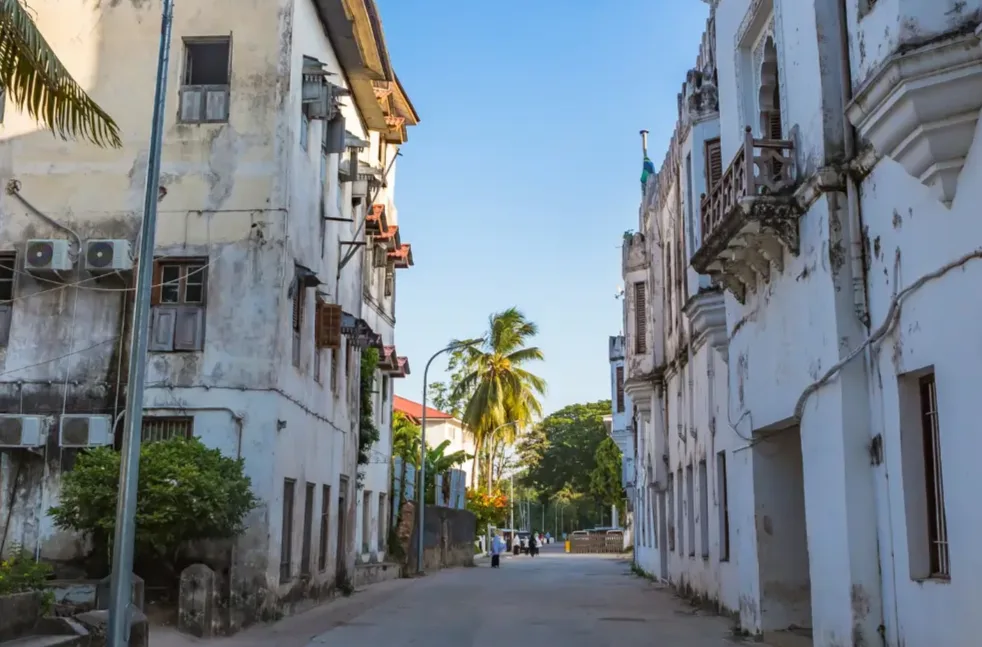
Zanzibar’s food reflects centuries of trade between Africa, Arabia, Persia and India. The most famous place to taste it is the evening food market at Forodhani Gardens on the Stone Town waterfront, where cooks grill seafood and fry snacks as the sun goes down.
| Swahili / local name | Say it | What it is |
|---|---|---|
| Zanzibar pizza | – | Not an Italian pizza: thin dough filled with minced meat, egg, onion and cheese, or sweet fillings such as banana and chocolate, folded and fried on a hot griddle. |
| Urojo (Zanzibar mix) | oo-ROH-joh | A tangy, yellow soup with fritters, potatoes, boiled egg, crispy toppings and chilli. |
| Samaki wa kupaka | sah-MAH-kee wah koo-PAH-kah | Grilled fish coated in a rich coconut and spice sauce. |
| Pweza wa nazi | PWEH-zah wah NAH-zee | Octopus cooked in coconut curry. |
| Kamba | KAHM-bah | Prawns, often grilled at Forodhani or on beach barbecues. |
Breakfast and sweet treats
| Swahili | Say it | What it is |
|---|---|---|
| Maandazi | mah-ahn-DAH-zee | Lightly sweet fried dough, sometimes flavoured with cardamom or coconut. Perfect with tea. |
| Vitumbua | vee-toom-BOO-ah | Small, fluffy rice-and-coconut pancakes cooked in a special pan. |
| Uji | OO-jee | Thin, warm porridge, often of millet or maize. |
| Kashata | kah-SHAH-tah | Crunchy coconut or peanut brittle sold in markets. |
| Kifungua kinywa | kee-foon-GOO-ah KEEN-ywah | The word for breakfast – literally “mouth opener”. |
Drinks in Swahili
| English | Swahili | Good to know |
|---|---|---|
| Water / drinking water | Maji / Maji ya kunywa | Choose sealed bottled or treated water. |
| Tea / Ginger tea | Chai / Chai ya tangawizi | Often served sweet with milk and spices. |
| Coffee | Kahawa | In Stone Town, strong coffee is poured into tiny cups from brass pots. |
| Juice / Sugar-cane juice | Juisi / Juisi ya miwa | Fresh sugar-cane juice is pressed on the spot, often with ginger and lime. |
| Young coconut | Dafu | Drink the coconut water, then eat the soft flesh. |
| Milk | Maziwa | Also used in chai ya maziwa, milky tea. |
| Beer | Bia | Local brands include Kilimanjaro, Safari and Serengeti. |
| Cold / Hot | Baridi / Moto | Bia baridi – a cold beer. |
Tropical fruits in Swahili
| English | Swahili | English | Swahili |
|---|---|---|---|
| Fruit | Tunda / Matunda | Mango | Embe |
| Banana | Ndizi | Pineapple | Nanasi |
| Papaya | Papai | Watermelon | Tikiti maji |
| Avocado | Parachichi | Orange | Chungwa |
| Coconut | Nazi | Lime / lemon | Ndimu |
| Jackfruit | Fenesi | Rambutan | Shokishoki |
Spices of the Spice Island
Zanzibar has been called the Spice Island for centuries, and cloves in particular have long been one of its most important crops. A spice farm visit is the best way to see, smell and taste them fresh.
| English | Swahili | English | Swahili |
|---|---|---|---|
| Cloves | Karafuu | Cinnamon | Mdalasini |
| Cardamom | Iliki | Ginger | Tangawizi |
| Nutmeg | Kungumanga | Black pepper | Pilipili manga |
| Chilli | Pilipili | Turmeric | Binzari manjano |
| Cumin | Jira | Garlic | Kitunguu saumu |
Our Zanzibar Island Immersion includes a spice farm, Stone Town and a sunset dhow seafood dinner, and the Zanzibar Cultural Deep Dive takes you further into local food and daily life.
Swahili phrases for ordering food
| English | Swahili | Say it |
|---|---|---|
| The menu, please | Menyu, tafadhali | MEH-nyoo tah-fah-DHAH-lee |
| I would like … | Naomba … | nah-OHM-bah |
| Without chilli, please | Bila pilipili, tafadhali | BEE-lah pee-lee-PEE-lee |
| I don’t eat meat | Sili nyama | SEE-lee NYAH-mah |
| I am allergic to peanuts | Nina mzio wa karanga | NEE-nah m-ZEE-oh wah kah-RAHN-gah |
| The food is very delicious | Chakula ni kitamu sana | chah-KOO-lah nee kee-TAH-moo SAH-nah |
| I am full | Nimeshiba | nee-meh-SHEE-bah |
| The bill, please | Naomba bili | nah-OHM-bah BEE-lee |
| Breakfast / Lunch / Dinner | Kifungua kinywa / Chakula cha mchana / Chakula cha jioni | – |
Allergies matter: if you have a serious allergy, carry a written note in Swahili and English and tell your guide or host before meals. For greetings, numbers and bargaining, see our Swahili phrases for travellers.
Food etiquette in Tanzania and Zanzibar
- Wash your hands before eating. In homes and local restaurants you may be offered a jug of water and a basin at the table.
- Eat with your right hand, especially when eating ugali or sharing a plate.
- “Karibu chakula” is a warm invitation to join someone who is eating. A friendly Asante is a perfectly polite reply, even if you decline.
- Respect Ramadan in Zanzibar. During the fasting month, avoid eating, drinking or smoking in public in the daytime; hotels and many restaurants still serve visitors.
- Choose busy, freshly cooked stalls and food served hot. Our Tanzania travel safety guide has more health tips.
Taste Tanzania with African Visuals & Safaris
Our local guides know where Tanzanians actually eat: the best mishkaki grill, the busiest chipsi mayai stall and the friendliest Forodhani cooks. Tell us you love food and we will build it into your trip.
Spice and culture
Spice farms, Stone Town and market visits on our Zanzibar Island Immersion.
Seafood by the sea
Fresh seafood lunches on our Mnemba dhow day.
Bush picnics
A picnic lunch under the baobabs on the Mikumi Day Safari.
Swahili food: FAQs
What is the national dish of Tanzania?
Ugali, a firm maize porridge served with meat, fish, beans or vegetables, is widely considered Tanzania’s national dish. It is eaten across the country, usually by hand.
What is Zanzibar pizza?
Zanzibar pizza is a Stone Town street food made from thin dough filled with minced meat, egg, onion and cheese, or with sweet fillings like banana and chocolate, then folded and fried on a griddle. It is famous at the Forodhani Gardens night market.
What is chipsi mayai?
Chipsi mayai means chips and eggs. It is a popular Tanzanian street food in which French fries are cooked into an omelette and served with tomato or chilli sauce.
What is the difference between pilau and biriani?
Pilau is rice cooked together with spices and meat in one pot. Biriani is richer: spiced rice is usually layered or served with a separately cooked, saucy meat, chicken or fish dish.
How do you say delicious in Swahili?
Delicious is tamu, and the food is delicious is chakula ni kitamu. Saying chakula ni kitamu sana, the food is very delicious, always earns a smile.
Is Tanzanian food spicy?
Most Tanzanian dishes are aromatic rather than very hot. Chilli, pilipili, is usually served on the side, so you can add as much as you like or ask for bila pilipili, without chilli.
Ready to taste Tanzania?
Tell us your dates and what you love to eat. We will plan a safari, Zanzibar or food-focused journey with local guides who know the best tables in town.
