
On safari in Tanzania, your guide will often spot an animal long before you do and whisper a single word: simba, tembo or twiga. Learning those words before your game drive makes the experience more exciting and helps you share the moment with your guide.
This guide lists the Swahili names of the animals you are most likely to see in Tanzania, from the Big Five to hippos, warthogs and the birds of Mikumi, plus the safari phrases and landscape words our guides use every day.
What are the Big Five in Swahili?
The Big Five in Swahili are simba (lion), chui (leopard), tembo or ndovu (elephant), nyati or mbogo (buffalo) and kifaru (rhinoceros). The word safari itself is Swahili and simply means “journey”.
The Big Five animals in Swahili
Stress the second-to-last syllable, shown in capitals in the pronunciation guide. Swahili nouns usually stay the same in the plural for animals, so simba can mean one lion or a whole pride.
| English | Swahili | Say it | Good to know |
|---|---|---|---|
| Lion | Simba | SEEM-bah | Also used as a name meaning strength and courage. |
| Leopard | Chui | CHOO-ee | Mostly nocturnal; look carefully in trees along rivers. |
| Elephant | Tembo / Ndovu | TEM-boh / n-DOH-voo | Both are correct; tembo is more common in Tanzania. |
| Buffalo | Nyati / Mbogo | NYAH-tee / m-BOH-goh | Often seen in large herds in Mikumi. |
| Rhinoceros | Kifaru | kee-FAH-roo | Rare and protected; the Ngorongoro Crater is one of the best places to look for black rhino. |
Plains animals and grazers
| English | Swahili | Say it | Good to know |
|---|---|---|---|
| Giraffe | Twiga | TWEE-gah | Tanzania’s national animal. |
| Zebra | Pundamilia | poon-dah-mee-LEE-ah | Literally “striped donkey”: punda (donkey) + milia (stripes). |
| Wildebeest | Nyumbu | NYOOM-boo | Stars of the Great Migration in the north. |
| Gazelle / antelope | Swala | SWAH-lah | General word for gazelles and similar antelopes. |
| Impala | Swala pala | SWAH-lah PAH-lah | Very common in Mikumi. |
| Eland | Pofu | POH-foo | The largest antelope in Africa. |
| Warthog | Ngiri | n-GEE-ree | Runs with its tail straight up like an antenna. |
| Baboon | Nyani | NYAH-nee | Keep food out of sight at picnic sites. |
| Vervet monkey | Tumbili | toom-BEE-lee | Small, cheeky and common near lodges. |
| Animal / Animals | Mnyama / Wanyama | m-NYAH-mah / wah-NYAH-mah | Useful for every game drive. |
Predators and scavengers
| English | Swahili | Say it | Good to know |
|---|---|---|---|
| Cheetah | Duma | DOO-mah | The fastest land animal; prefers open plains. |
| Hyena | Fisi | FEE-see | Often heard at night with its famous “whoop” call. |
| African wild dog | Mbwa mwitu | m-BWAH MWEE-too | Literally “wild dog”; endangered and rarely seen. |
| Jackal | Bweha | BWEH-hah | Small and quick, often near larger predators. |
| Eagle / Vulture | Tai / Tumbusi | TAH-ee / toom-BOO-see | Look for vultures circling above a recent kill. |
Water animals, birds and reptiles
| English | Swahili | Say it | Good to know |
|---|---|---|---|
| Hippopotamus | Kiboko | kee-BOH-koh | See them at the Mikumi hippo pool. |
| Crocodile | Mamba | MAHM-bah | Not the snake! In Swahili, mamba is a crocodile. |
| Snake | Nyoka | NYOH-kah | Rarely seen on game drives. |
| Tortoise | Kobe | KOH-beh | Giant tortoises live on Zanzibar’s Prison Island. |
| Bird | Ndege | n-DEH-geh | Also the word for aeroplane. |
| Ostrich | Mbuni | m-BOO-nee | The world’s largest bird. |
Ocean animals for your Zanzibar trip
| English | Swahili | Say it |
|---|---|---|
| Dolphin | Pomboo | pom-BOH-oh |
| Sea turtle | Kasa | KAH-sah |
| Fish | Samaki | sah-MAH-kee |
| Octopus | Pweza | PWEH-zah |
| Sea / Ocean | Bahari | bah-HAH-ree |
You can practise these on a Mnemba Island dhow and snorkelling day, and read our Mnemba snorkelling guide before you go.
Landscape and nature words
| English | Swahili | English | Swahili |
|---|---|---|---|
| National park | Hifadhi ya Taifa | In the bush / the wild | Porini |
| Open grassland plain | Mbuga | Tree | Mti |
| Baobab tree | Mbuyu | River | Mto |
| Lake | Ziwa | Mountain | Mlima |
| Sun | Jua | Rain | Mvua |
Swahili phrases to use on a game drive
| English | Swahili | Say it |
|---|---|---|
| Look! | Angalia! | ahn-gah-LEE-ah |
| Over there! | Kule! | KOO-leh |
| Where is it? | Iko wapi? | EE-koh WAH-pee |
| What animal is that? | Ni mnyama gani? | nee m-NYAH-mah GAH-nee |
| Please stop | Simama, tafadhali | see-MAH-mah |
| Slowly | Pole pole | POH-leh POH-leh |
| Quiet | Kimya | KEEM-yah |
| I see it! | Nimeona! | nee-meh-OH-nah |
| Very beautiful! | Nzuri sana! | n-ZOO-ree SAH-nah |
| Thank you, guide! | Asante sana, mkuu! | ah-SAHN-teh SAH-nah, m-KOO |
For greetings, numbers, shopping and the famous “Swahili time”, see our full guide to Swahili phrases for travellers.
The Lion King’s Swahili words, explained
Many travellers already know some Swahili thanks to The Lion King. Simba means lion, Rafiki means friend and Hakuna matata means “no worries”. Pumbaa comes from a Swahili word linked to being foolish or careless, which suits the warthog’s character. On safari you will meet the real simba, ngiri and nyani – with considerably less singing.
Find simba, tembo and twiga with African Visuals & Safaris
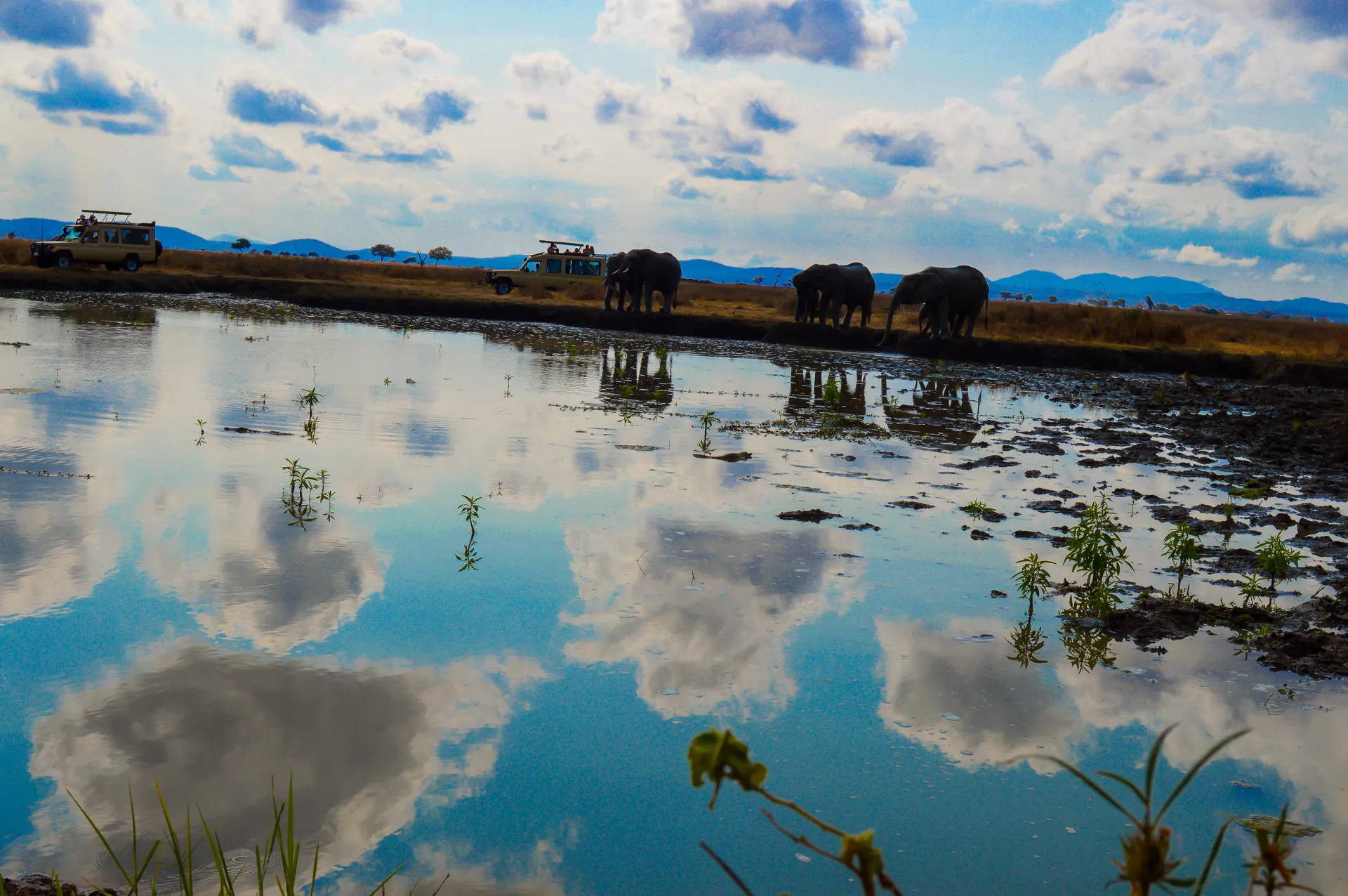
Mikumi National Park is the closest major safari park to Dar es Salaam. Its open Mkata floodplain is home to elephants, giraffes, zebras, buffalo, wildebeest, impala, hippos and lions, making it a superb first safari.
One day
The Mikumi Day Safari from Dar es Salaam is ideal for short stays and cruise visitors.
Under the stars
The Mikumi Bush Camping Adventure adds a campfire night in the wild.
Private and unhurried
The Private Mikumi Safari gives you dawn and dusk game drives over three days.
Swahili animal names: FAQs
What is lion in Swahili?
Lion in Swahili is simba, pronounced SEEM-bah. The same word is used for one lion or several lions.
What is elephant in Swahili?
Elephant is tembo or ndovu in Swahili. Both are correct, and tembo is the word you will hear most often in Tanzania.
What does safari mean in Swahili?
Safari means journey or trip in Swahili. Any journey can be a safari, while a wildlife trip is often described as a safari ya wanyama.
What is giraffe in Swahili?
Giraffe is twiga, pronounced TWEE-gah. The giraffe is the national animal of Tanzania.
Can you see the Big Five in Mikumi National Park?
Mikumi is excellent for elephants, buffalo, giraffes, zebras and lions, and leopards are present but hard to spot. Rhinos are not part of a typical Mikumi safari, so travellers who want all of the Big Five usually add a northern park such as the Ngorongoro Crater.
Ready to shout “Angalia, simba!”?
Send us your dates and group size and we will recommend the right Mikumi safari, from a single day to a private three-day adventure.
