
Tanzania is a year-round destination, but each season offers a very different trip. The dry months bring classic game viewing and the famous Mara River crossings; the green season brings newborn wildlife, lush landscapes and lower prices; and Zanzibar’s beaches have their own rhythm of sunshine, wind and rain.
This month-by-month guide from African Visuals & Safaris explains what to expect on safari, on Kilimanjaro and in Zanzibar throughout the year, so you can choose the season that suits your budget and your dream trip.
Please note: seasons describe typical conditions. Weather varies from year to year and between regions, and wildlife movements are never fixed. We plan every route around the latest conditions.
When is the best time to visit Tanzania?
For most travellers, the best time is the long dry season from June to October, when wildlife is easiest to see and the weather is pleasant. January and February are excellent for the wildebeest calving season and for combining safari with Zanzibar. April and May are the wettest, quietest and most affordable months.
Tanzania’s seasons at a glance
| Season | Months | Why go | Keep in mind |
|---|---|---|---|
| Long dry season | June – October | Best overall game viewing, sunny days, cool mornings, Mara River crossings. | Peak season: highest prices and busiest parks, especially July and August. |
| Short rains | November – mid-December | Fewer visitors, greener landscapes, migratory birds arrive. | Afternoon showers are common but usually short. |
| Short dry / green season | Mid-December – February | Wildebeest calving, newborn animals, warm weather, great for safari plus beach. | Christmas and New Year are busy and should be booked early. |
| Long rains | March – May | Lowest prices, lush scenery, very few vehicles. | April is the wettest month; some roads become muddy and some camps close. |
Tanzania month by month
| Month | Safari | Zanzibar | Crowds & prices |
|---|---|---|---|
| January | Warm and green; calving begins in the southern Serengeti. | Hot, sunny and calm seas. | Busy in early January, then moderate. |
| February | Peak calving season; predators are very active. | Hot and humid, excellent beach weather. | Moderate; very popular for calving safaris. |
| March | Rains often begin; landscapes are lush. | Hot, with rain increasing later in the month. | Quieter; prices start to fall. |
| April | The wettest month; some camps close. | Heavy rain; the quietest time on the island. | Lowest prices and very few visitors. |
| May | Rains ease towards the end of the month; very green. | Rainy early, improving later. | Low season with good deals. |
| June | Dry season begins; the migration moves through the western Serengeti. | Dry, sunny and slightly cooler. | Getting busier; book ahead. |
| July | Excellent game viewing; Mara River crossings can begin. | Dry and pleasant, breezier on the east coast. | Peak season; book well in advance. |
| August | Peak of the dry season; river crossings in the northern Serengeti. | Dry and sunny, good wind for kitesurfing. | Peak season and highest prices. |
| September | Superb wildlife viewing and continuing crossings. | Dry and warm. | Busy but a little quieter than August. |
| October | Still dry, hot and excellent for game viewing. | Warm, often calm and clear water. | Shoulder season with fewer vehicles. |
| November | Short rains; the herds start moving south. | Short showers between sunny spells. | Quiet with good value. |
| December | Green and beautiful; herds arrive in the south. | Hot and sunny after the short rains. | Very busy over Christmas and New Year. |
When to see the Great Migration in Tanzania
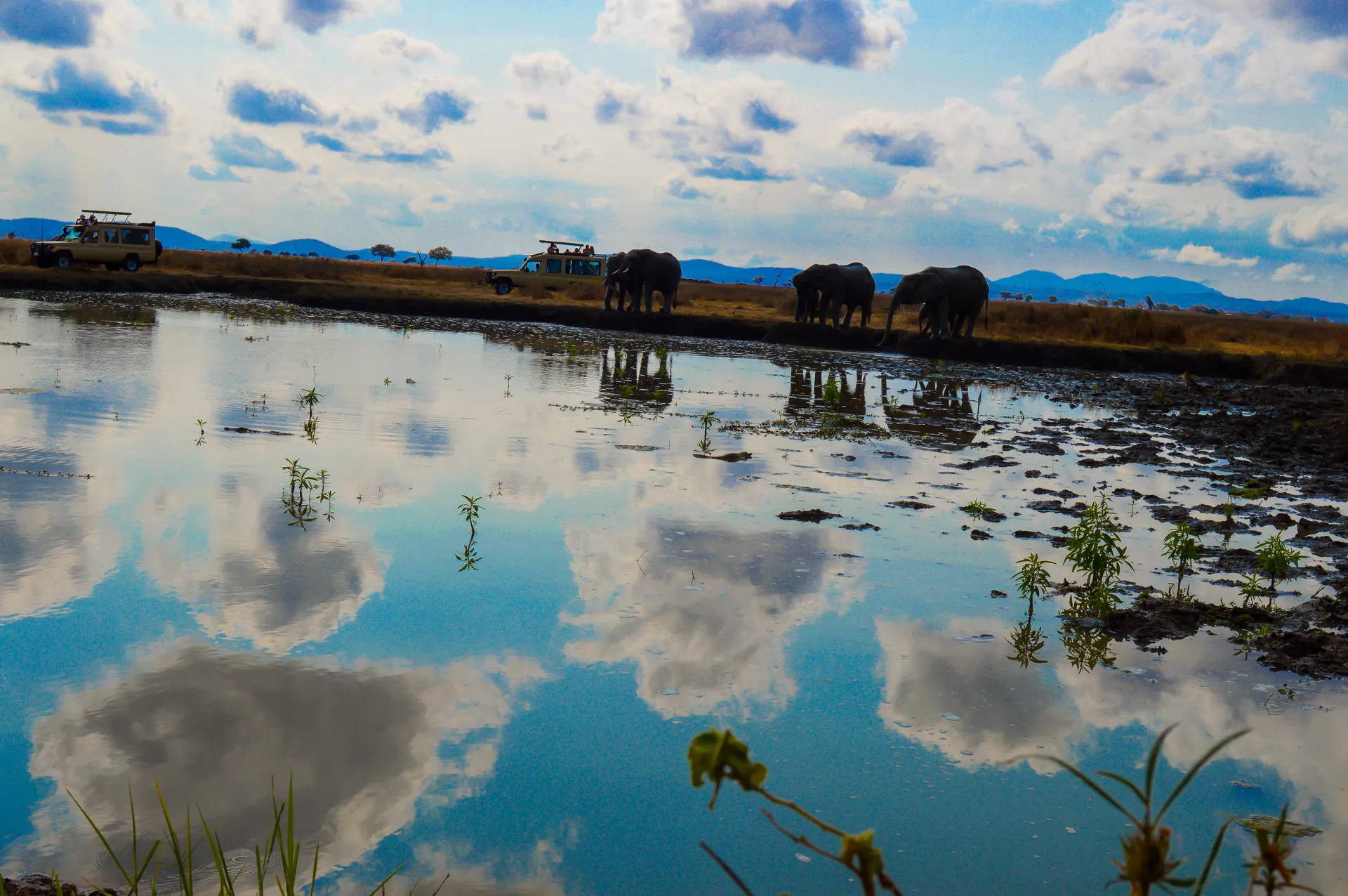
More than a million wildebeest, together with zebras and gazelles, follow the rains around the Serengeti ecosystem in a roughly circular route. The timing changes each year with rainfall, but this is the general pattern:
- December – March: the herds graze the short-grass plains of the southern Serengeti and the Ndutu area. Calving usually peaks in February.
- April – May: the herds start moving north and west through the central Serengeti during the long rains.
- June – July: they gather in the western corridor, where Grumeti River crossings can occur.
- July – October: the herds reach the northern Serengeti, home of the dramatic Mara River crossings.
- November: the short rains draw the herds back south.
Our 11-Day Tanzania Safari & Zanzibar combines the Serengeti, Ngorongoro Crater, Tarangire and Lake Manyara with beach time on Zanzibar, and we adjust the route to where the herds are expected during your dates.
Best time to visit Zanzibar
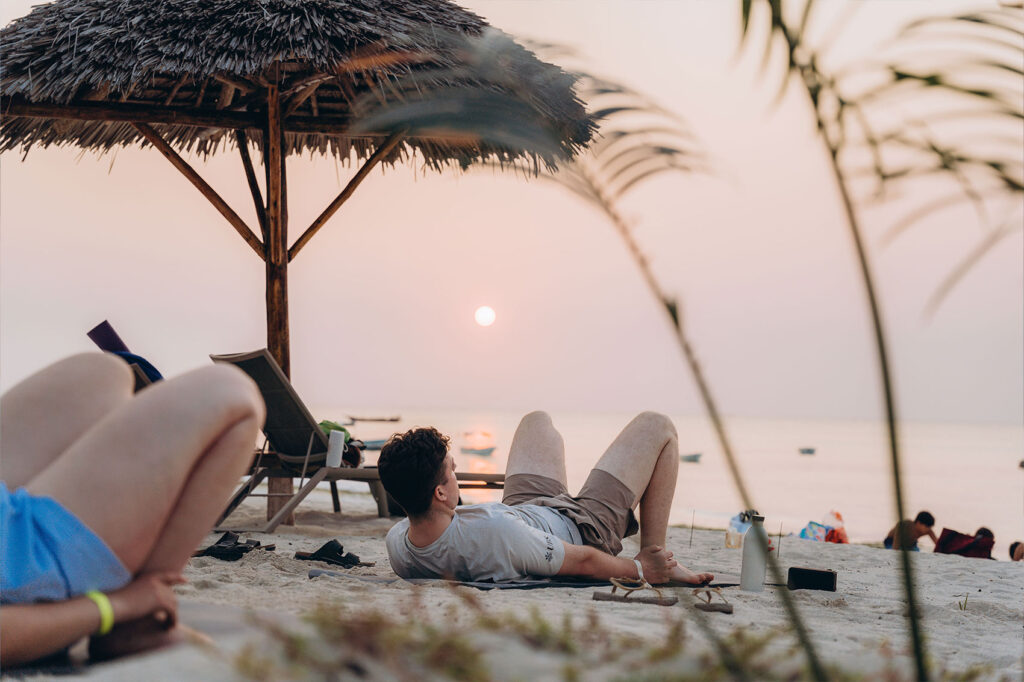
Zanzibar is warm all year. The best beach weather is usually from June to October (dry and slightly cooler) and from December to February (hot, sunny and humid). The long rains from March to May, especially April, bring heavy showers, while November has shorter rains between sunny spells.
The trade winds also matter: the east coast can be breezy from around June to September, which is great for kitesurfing, while calmer seas and clearer water are common from about October to March – ideal for snorkelling trips such as our Mnemba Island dhow day. Read more in our Mnemba snorkelling guide.
Ramadan: the holy month moves about eleven days earlier each year; in 2027 it is expected to fall in roughly February and early March. Zanzibar remains welcoming, but daytime life is quieter and visitors should avoid eating or drinking in public during the day.
Best time to climb Kilimanjaro
The most popular climbing windows are January to early March and June to October, when conditions are usually drier and clearer. January to March tends to be a little warmer with fewer climbers; July to September is busier. April, May and November are wetter and generally avoided.
Best time for Mikumi and southern safaris
Mikumi National Park, the closest major park to Dar es Salaam, follows the same pattern: June to October gives the most reliable game viewing, while November to April is greener and excellent for birds. Because Mikumi is reachable by road, it is open and accessible all year. See our Mikumi day trip guide or choose between the Mikumi Day Safari, the Private Mikumi Safari and the Tanzania Grand Safari Combo with Zanzibar.
Best time to visit Tanzania by type of traveller
| If you are… | Go in | Why |
|---|---|---|
| A first-time safari traveller | June – October | Easiest wildlife viewing and dependable weather. |
| Hoping to see river crossings | July – September | Best chance of Mara River crossings in the northern Serengeti. |
| Keen to see baby animals | January – February | Wildebeest calving season and active predators. |
| Combining safari and beach | June – October or January – February | Good weather on the mainland and in Zanzibar at the same time. |
| Travelling on a budget | April – May or November | Lower prices and quiet parks, with some rain. |
| A photographer or birder | November – April | Dramatic skies, green landscapes and migratory birds. |
| A family with school-age children | July – August or December | Matches school holidays; book early. |
Before you book, check entry requirements in our Tanzania visa and travel safety guide, and learn a few words with our Swahili phrases for travellers.
Plan your Tanzania season with African Visuals & Safaris
We are a registered Tanzanian company based in Dar es Salaam. We follow the rains, the road conditions and the herds every week, and we use that knowledge to plan a route that fits your dates instead of forcing your dates into a fixed package.
Local timing
We know when a park is at its best and when a short detour makes a big difference.
Safari and beach
We connect the mainland parks with Zanzibar so your trip flows smoothly.
Honest advice
If another month would suit you better, we will tell you before you book.
Best time to visit Tanzania: FAQs
What is the best month to visit Tanzania?
For classic game viewing, the best months are June to October, with July to September offering the best chance of Mara River crossings. February is outstanding for the wildebeest calving season, and January to February is ideal for combining safari with Zanzibar.
What is the rainy season in Tanzania?
Tanzania has two rainy seasons: the long rains from around March to May, with April usually the wettest month, and the short rains from around November to mid-December. Short-rain showers are usually brief.
Is it worth visiting Tanzania in the rainy season?
Yes, for flexible travellers. The green season brings lower prices, fewer vehicles, lush scenery and excellent birdlife. Expect some rain and muddy roads, and note that a few camps close in April and May.
When is the cheapest time to go on safari in Tanzania?
April and May are usually the cheapest months, followed by November and early December. Prices are highest in July, August and over Christmas and New Year.
When is the best time to see the Great Migration in Tanzania?
The herds are in the southern Serengeti for calving from about December to March, in the western corridor around June and July, and in the northern Serengeti for the Mara River crossings from about July to October. Exact timing depends on rainfall each year.
What is the best time to visit Zanzibar?
The best beach weather in Zanzibar is usually from June to October and from December to February. The long rains from March to May, especially April, are the wettest period.
Not sure which month is right for you?
Tell us when you can travel, how many people are coming and what you most want to see. We will recommend the best season and route and send you a clear quotation.
