Serengeti National Park is Tanzania’s great theatre of wildlife: open plains stretching into the horizon, granite kopjes rising like islands, river valleys sheltering predators and immense herds moving with rain and fresh grass. The Great Migration may be its most famous story, but resident lions, leopards, cheetahs, elephants, buffalo and more than 500 bird species make the Serengeti rewarding throughout the year.
When is the best time to visit the Serengeti?
The Serengeti is excellent year-round. January to March often places the migration on the southern plains and around Ndutu for calving. April to June brings green landscapes and a general movement toward the central and western areas. July to October is associated with northern Serengeti and possible Mara River crossings. November and December often see herds move south again after seasonal rain. Nature does not follow a fixed calendar, so the best month depends on the region and experience you want.
Why the Serengeti belongs on a Tanzania safari
Established in 1951, Serengeti is Tanzania’s oldest national park and protects about 14,750 square kilometres of northern Tanzania. It became a UNESCO World Heritage Site in 1981 and forms the heart of a much larger ecosystem extending through the Ngorongoro landscape, surrounding reserves and community areas to Kenya’s Maasai Mara.
The name Serengeti is commonly linked to the Maa word Siringet, often translated as “the place where the land runs on forever”. That sense of scale is real. Yet the park is not one uniform plain: grassland, acacia woodland, riverine forest, seasonal wetlands, rocky kopjes and northern hills create very different safari experiences.
More than 1.5 million wildebeest move with vast numbers of zebra and gazelles as rainfall changes grazing and water across the ecosystem.
Lions, cheetahs, leopards and spotted hyenas use the plains, kopjes, woodland and river valleys in different ways.
Resident animals remain even when the largest migration herds are in another region, making timing about character rather than a simple good or bad season.
Short-grass plains, the Seronera Valley, Grumeti woodland, Mara River country and granite kopjes each deserve time.
How the Serengeti landscape was formed
Volcanic activity in the Ngorongoro highlands spread mineral-rich ash over the southern Serengeti plains. These shallow soils favour short, nutritious grasses that recover quickly after rain and provide vital grazing for migratory wildebeest, zebra and gazelles. Farther north and west, deeper soils support taller grass, acacia woodland and riverine vegetation.
Granite kopjes are much older than the surrounding volcanic story. Weathering exposed these rounded outcrops above the plains, creating shade, den sites and observation points for lions, leopards, hyraxes, reptiles and birds. Moru, Gol and other kopje systems are destinations in their own right, but wildlife sightings and access always depend on season and current park rules.
Understanding the Serengeti’s regions
Central Serengeti and the Seronera Valley
Central Serengeti is the most dependable all-season base. The Seronera River system, open plains, woodland and kopjes support resident herbivores and predators throughout the year. Its central position makes it useful for road itineraries and flight connections, but it can also be the busiest region. Two nights provide far more flexibility than a rushed pass-through.
Southern plains and the Ndutu ecosystem
From roughly December to March, short grass and seasonal rain often draw large herds toward the southern Serengeti and neighbouring Ndutu area. Much of Ndutu lies within the Ngorongoro Conservation Area rather than the national park, but it is part of the same migration ecosystem. Calving commonly peaks around February, attracting cheetahs, lions, hyenas and other predators. Timing and herd location vary from year to year.
Western Corridor and Grumeti
As the long rains ease, herds generally move through central and western areas. The Grumeti River, woodland and open country give the west a different atmosphere from the southern plains. River crossings may occur from roughly May to July, but they are scattered natural events and cannot be scheduled like a performance.
Northern Serengeti
From around July to October, many travellers choose the Kogatende and Lamai areas for a chance of seeing the migration near the Mara River. Some herds cross into Kenya and later return; others remain in Tanzania. A crossing may happen suddenly, after hours of hesitation, or not during your stay. Allow three or four nights and value the north for its landscapes, resident wildlife and lower-density safari areas as well as the river.
Eastern Serengeti
Eastern plains and kopje country can be exceptional for cheetah, lion and wide-open scenery. Certain areas have seasonal access or fewer accommodation choices, which can create a quieter experience. The east may suit repeat visitors and photographers when wildlife conditions align with the route.
The Great Migration month by month
The migration is a continuous response to rain, water and grass. The outline below is a planning guide, not a guarantee. Local rainfall may shift the herds by weeks, and no operator controls calving dates or river crossings.
Herds are often spread across the southern plains and Ndutu ecosystem. Calving usually peaks during this period, with intense predator activity and green scenery.
Long rains bring dramatic skies as herds generally move through central Serengeti toward the western corridor. Some seasonal camps close in the wettest weeks.
Many herds reach the northern Serengeti and Mara River region. Crossings are possible but unpredictable; several nights improve opportunity without creating certainty.
Short rains often encourage a southward movement through eastern or central areas. The plains become greener and patterns vary with where useful rain falls.
For a wider weather and wildlife comparison, read our best time to visit Tanzania month by month.
A responsible Serengeti itinerary chooses the most suitable region for historical seasonal patterns, then allows enough nights for natural movement. It should still deliver a rewarding safari if no crossing happens.
Wildlife beyond the migration
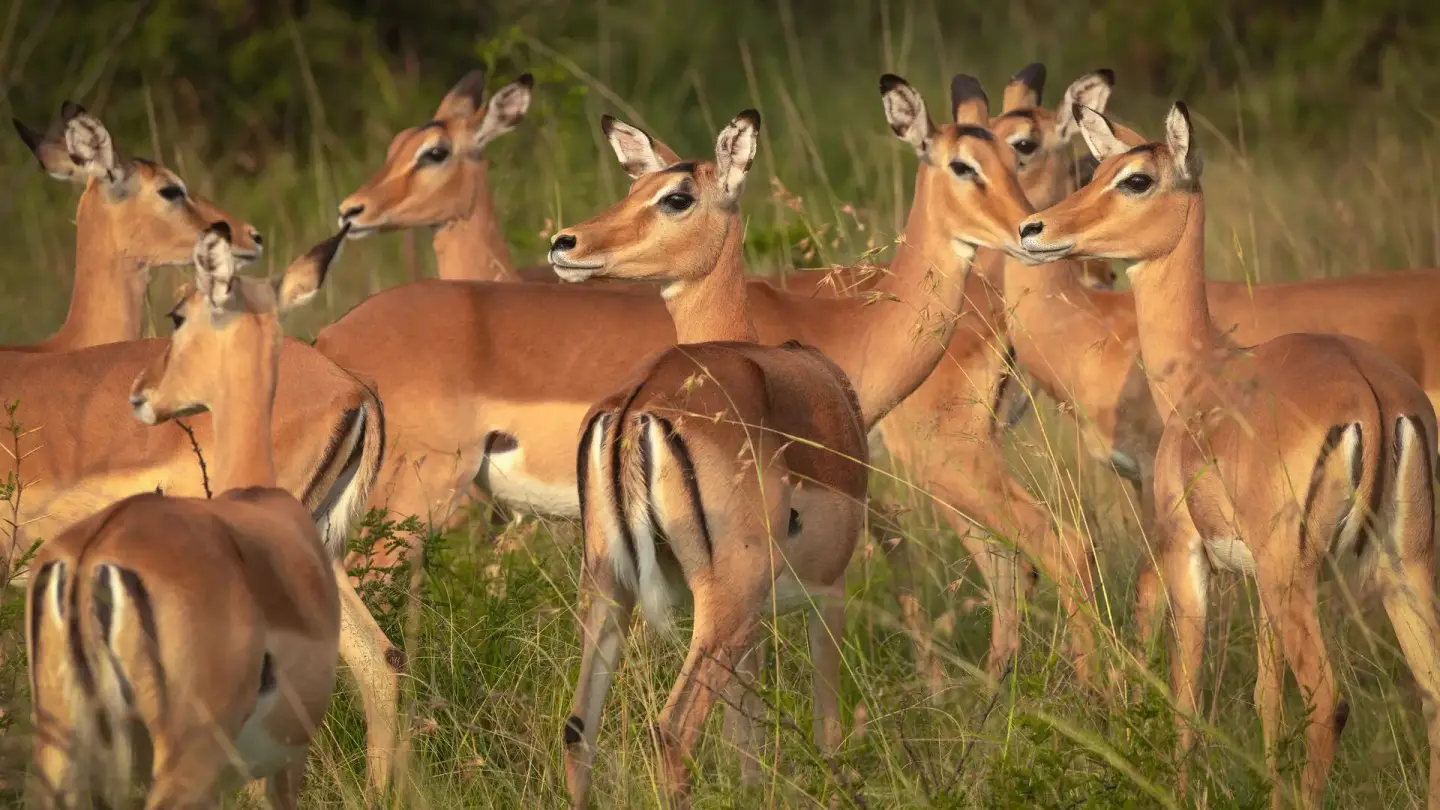
Serengeti supports lion, leopard, cheetah, spotted hyena, elephant, buffalo, giraffe, hippopotamus, crocodile, eland, topi, hartebeest, impala, waterbuck, warthog, dik-dik, jackal and many other species. Black rhino and African wild dog occur but are rare and should never be promised.
The Big Five are present, although rhino sightings are especially fortunate and leopard require patience. Cheetahs favour open country, while leopards often use riverine trees and rocky cover. Lions may rest on kopjes or close to prey-rich plains. Hyenas are skilled hunters with complex social groups, rather than simply scavengers.
More than 500 bird species have been recorded across the park and wider ecosystem. Ostriches, secretary birds, kori bustards, raptors, vultures, rollers, lovebirds, weavers, waterbirds and seasonal migrants make every game drive valuable for birdwatchers.
Safari activities
- Game drives: morning, afternoon or full-day drives adapted to wildlife movement, distance and park regulations.
- Balloon safari: a pre-dawn transfer and sunrise flight over selected areas, followed by the operator’s landing arrangements and breakfast.
- Photography: private vehicles and longer stays help with light, positioning and patient observation without rushing between sightings.
- Guided walking: available only in designated areas through authorised operators and subject to age, safety and seasonal conditions.
- Bush meals and sundowners: offered by selected camps in approved locations, with inclusions confirmed before booking.
Cultural visits should be arranged respectfully in appropriate communities outside the national park. Olduvai Gorge and important archaeological sites lie within the neighbouring Ngorongoro Conservation Area and may fit a road itinerary between the Serengeti and the highlands.
How many days do you need in the Serengeti?
A short introduction to one region. It can work within a tight northern circuit but leaves little margin for weather, distance or changing wildlife.
A practical minimum for central or southern Serengeti, giving two fuller wildlife days plus arrival and departure drives.
Recommended for northern Serengeti or photographers, and useful when migration movement is a major priority.
Best for splitting time between two regions, travelling slowly or combining resident wildlife with seasonal migration areas.
The park is immense, so adding destinations can reduce the time actually spent watching wildlife. A good itinerary chooses one or two suitable regions rather than trying to cover south, central, west and north in a few days.
Getting to the Serengeti
By road from Arusha
A road safari usually travels through the northern highlands and Ngorongoro area. The journey to central Serengeti commonly takes seven to eight hours or longer when stops, gate formalities and road conditions are included. The route becomes part of the experience, but transfer days must be planned honestly.
By scheduled light aircraft
Flights connect Arusha, Kilimanjaro, Zanzibar and other safari areas with Serengeti airstrips. Seronera serves the centre, while Kogatende, Lobo, Grumeti and other airstrips support different regions. Schedules, stops and seasonal operations vary. Soft luggage and strict weight limits normally apply.
Drive one way and fly the other
This is often the best balance. Driving into the Serengeti adds Ngorongoro scenery and a sense of changing landscape, while flying out saves a long return and can connect directly with Zanzibar.
Where to stay
Serengeti accommodation ranges from public and special campsites to permanent lodges, year-round tented camps and seasonal mobile camps. The correct location matters more than a famous name because daily transfer distance determines how much time you spend with wildlife.
Established buildings, restaurants and broader facilities suit travellers who value conventional rooms, reliable amenities and family services.
Canvas suites with beds, private bathrooms and meals combine comfort with the sounds and atmosphere of the bush.
Camps reposition between migration regions during the year. Confirm exact operating dates, airstrip access and whether the location matches your travel month.
Public and special campsites offer an adventurous option with different privacy, equipment, crew and facility arrangements.
How much does a Serengeti safari cost?
There is no reliable one-price answer. Cost depends on travel season, number of people sharing the vehicle, accommodation level, park and concession fees, road versus flight transfers, number of Serengeti regions and optional activities such as a balloon safari.
A private solo trip carries the full vehicle and guide cost, while couples, families and small groups share those fixed expenses. A camp in the correct region may cost more than one far away but save hours of driving. Compare the complete itinerary, room basis, fees, meals, transfers and cancellation terms rather than a headline daily rate.
Peak migration periods, festive dates and sought-after camps can sell out many months ahead. Our guide to how early to book a Tanzania safari explains the planning window.
Build the Serengeti into a northern Tanzania itinerary
A classic route combines Tarangire National Park, Lake Manyara, the Ngorongoro highlands and Serengeti. Allow eight to ten days for a comfortable road safari, or use a flight to reduce backtracking. An eleven- to fourteen-day journey can add Zanzibar without compressing the wildlife days.
Explore the 11-Day Tanzania Safari & Zanzibar or the Tanzania Grand Safari Combo. Both can be adjusted around your group, comfort level and the Serengeti region best suited to your dates.
Responsible travel and park safety
- Stay on authorised tracks, respect speed limits and follow your guide and ranger instructions.
- Do not feed wildlife, pressure a guide to crowd animals or request illegal off-road driving.
- Remain inside the vehicle except at designated areas or during an authorised guided activity.
- Carry sufficient water, sun protection, insect repellent and warm layers for early drives.
- Use soft-sided luggage and confirm weight allowances for every light-aircraft sector.
- Check current fees, regulations and access information in the official TANAPA Serengeti visitor guide.
Serengeti National Park FAQs
What is Serengeti National Park famous for?
Serengeti is famous for the Great Migration, immense plains and exceptional predator populations. It is also Tanzania’s oldest national park and has been a UNESCO World Heritage Site since 1981.
What is the best month to visit the Serengeti?
The best month depends on the region and your priorities. January to March often suits southern calving-season travel, while July to October is popular in the north. Central Serengeti offers resident wildlife throughout the year.
When is the Great Migration in the Serengeti?
The migration remains within the wider Serengeti ecosystem throughout the year. Herds generally use the southern plains early in the year, move west and north after the long rains, and return south after seasonal rain. Exact timing changes annually.
When can I see a Mara River crossing?
Crossing opportunities are usually sought in northern Serengeti from roughly July to October. They cannot be guaranteed on a particular day, and several nights provide a better chance than a rushed visit.
How many days should I spend in the Serengeti?
Three nights is a practical minimum for one region. Four nights is better for northern Serengeti or migration-focused travel, while five or more nights allows two regions or a slower photographic safari.
Can I see the Big Five in Serengeti?
Lion, leopard, elephant, buffalo and black rhino occur in the ecosystem, but rhino are rare and leopard can be elusive. No ethical safari operator can guarantee all five.
Is Ndutu inside Serengeti National Park?
The Ndutu area lies mainly within the neighbouring Ngorongoro Conservation Area, beside the southern Serengeti. It forms part of the same migration ecosystem and is commonly combined with the park during the calving season.
Is it better to fly or drive to the Serengeti?
Driving adds scenery and other northern-circuit destinations, while flying saves time and reduces long return transfers. Many travellers drive in through the highlands and fly out to Arusha or Zanzibar.
Is Serengeti suitable for children?
Yes, with a private vehicle, sensible drive lengths and family-friendly accommodation. Confirm minimum ages for walking, balloon flights and specific camps before booking.
Build a safari around what you want to experience
Share your dates, group size, preferred comfort level and whether migration, big cats, photography or family travel matters most. African Visuals & Safaris will select the right Serengeti region and create a clear, realistic itinerary.